- Bid/Ask — maximum detail; Delta — quick balance; Volume — scale; Profile — visual map
- Absolute numbers depend on the instrument; relative thresholds (200%, 10%) work across all markets
- Footprint shows what happened, not where price will go — data, not a forecast
- Large delta does not guarantee price movement — absorption is possible
Types, Benchmarks, and Limitations
Beginner10 min read
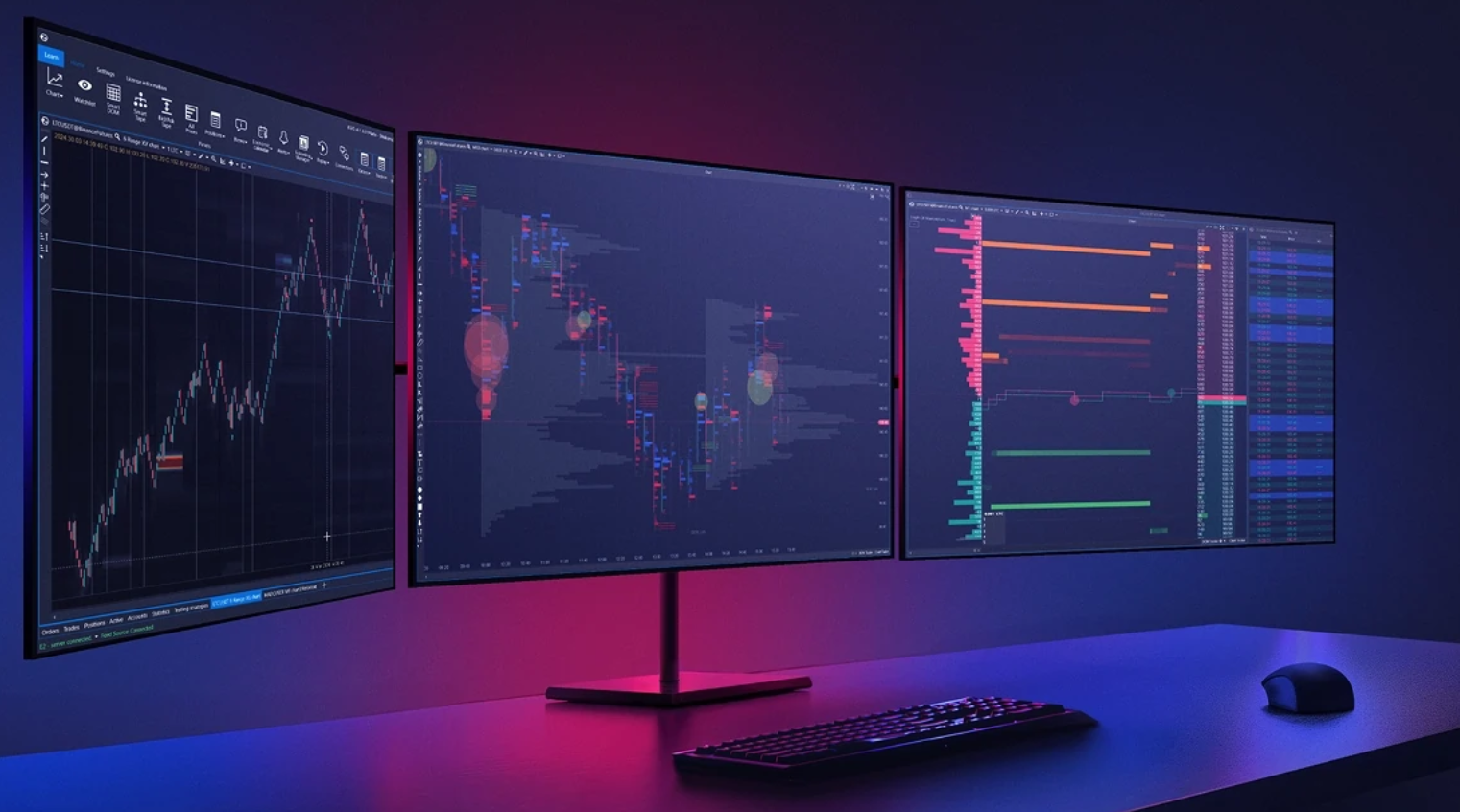
Footprint types: four projections of the same data
Bid/Ask footprint is the standard view we have been working with. Two columns, each level shows aggressive buys and sells. Maximum information. But platforms offer other representations as well.
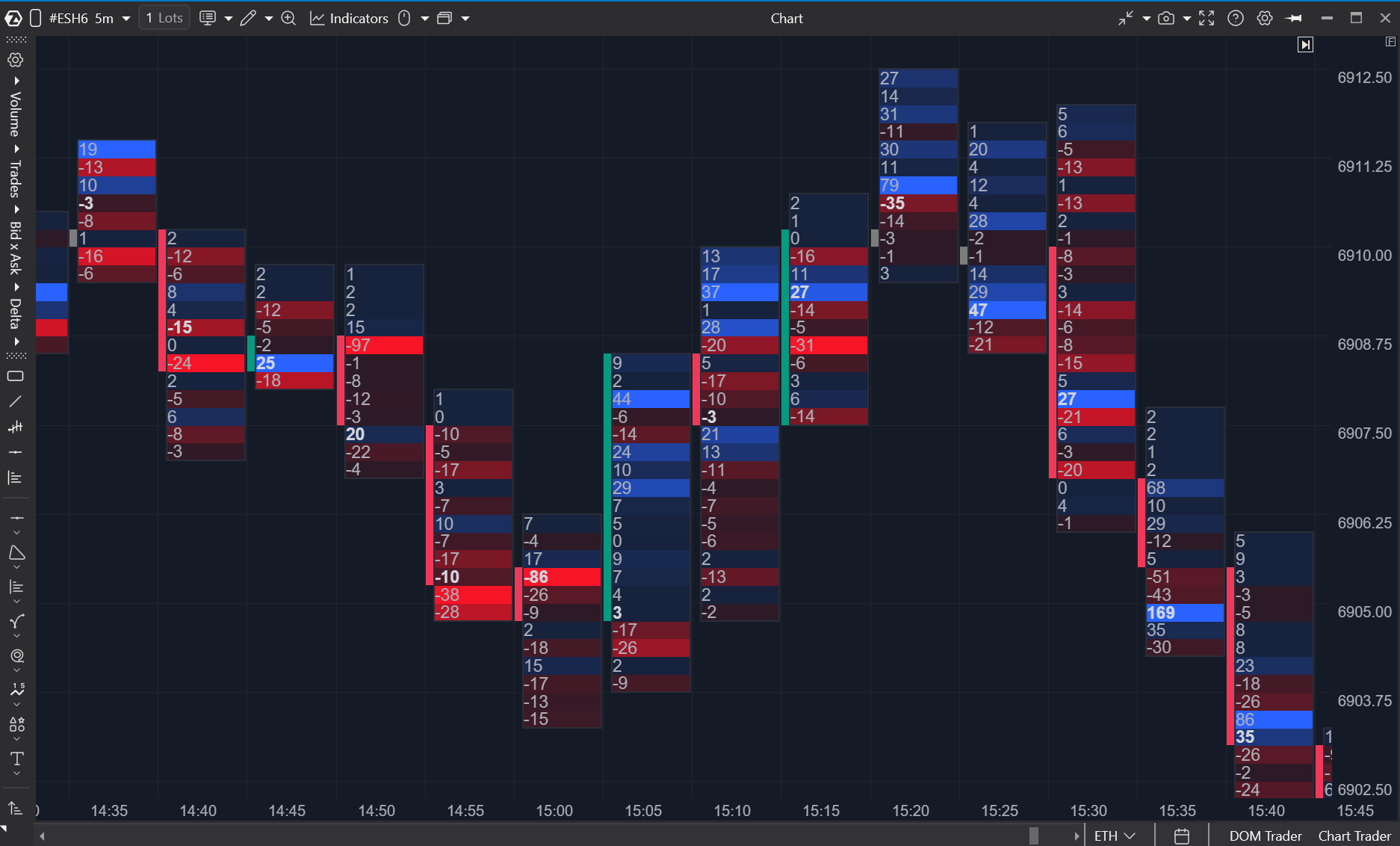
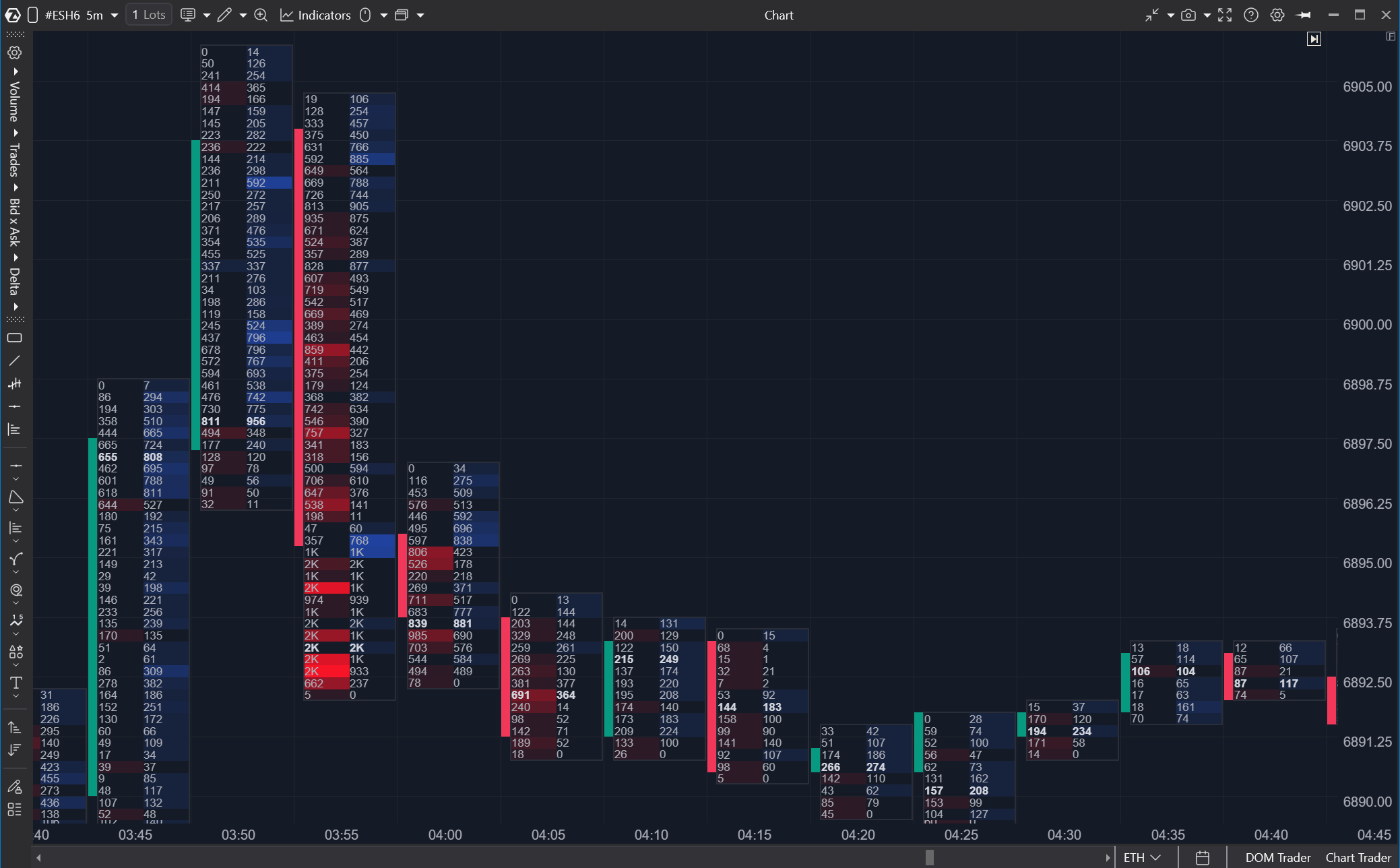 Delta footprint. Instead of two columns — a single number per level: ask - bid. Positive means buyers are more aggressive, negative means sellers. A quick glance at the balance at each price level. But scale is lost: a delta of +20 could mean 520 buys and 500 sells (a battle) or 22 buys and 2 sells (silence). The numbers are the same, the situations are not.
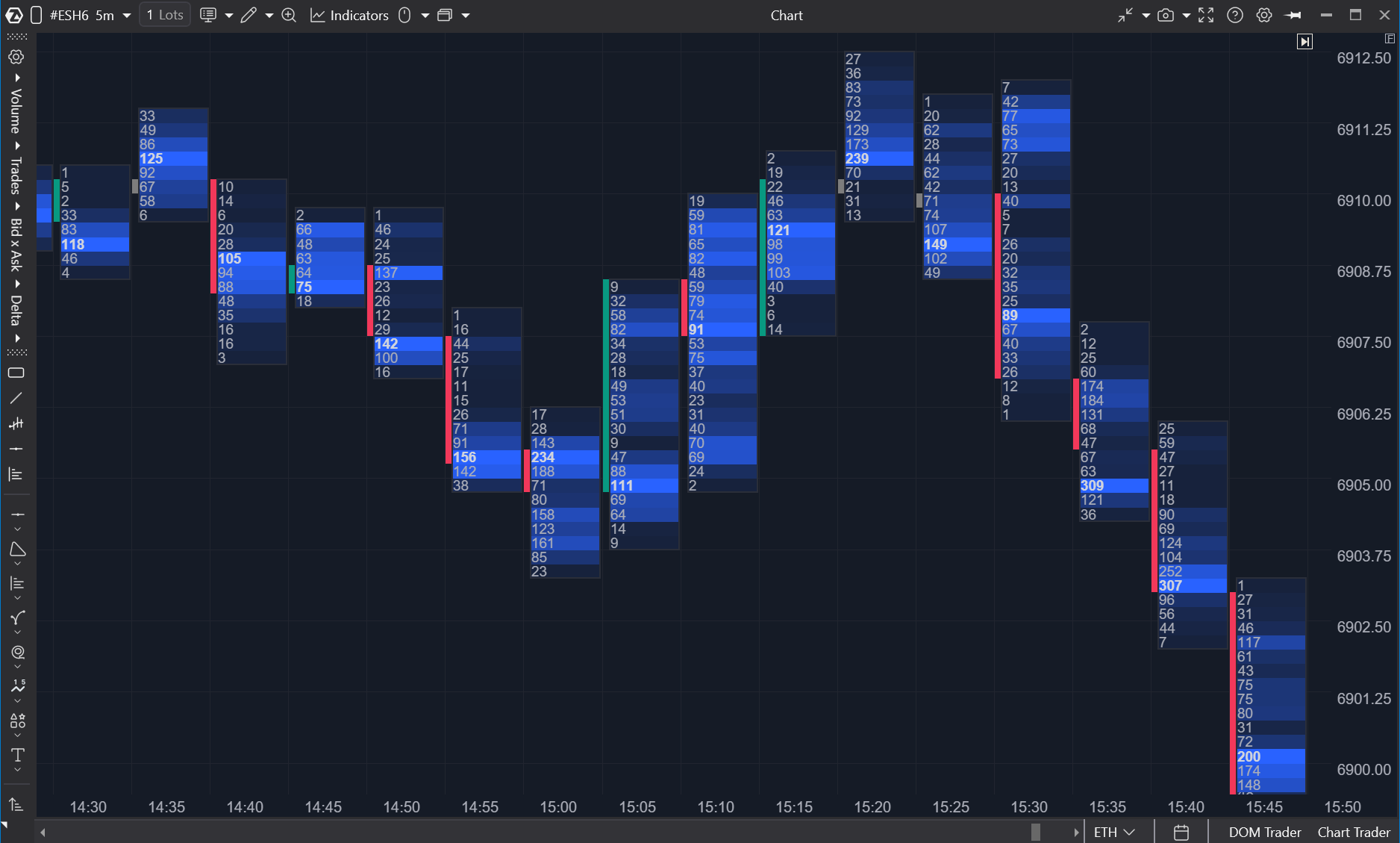
Volume footprint. Total volume (bid + ask) at each level. Essentially — the Volume Profile of a single candle. It shows WHERE the market found interest. It does not show WHO was the aggressor.
 Volume Profile footprint. A visual histogram of the same total volume: horizontal bars of varying length next to the candle. Long bar = high volume = zone of interest. Short bar = the market passed right through.
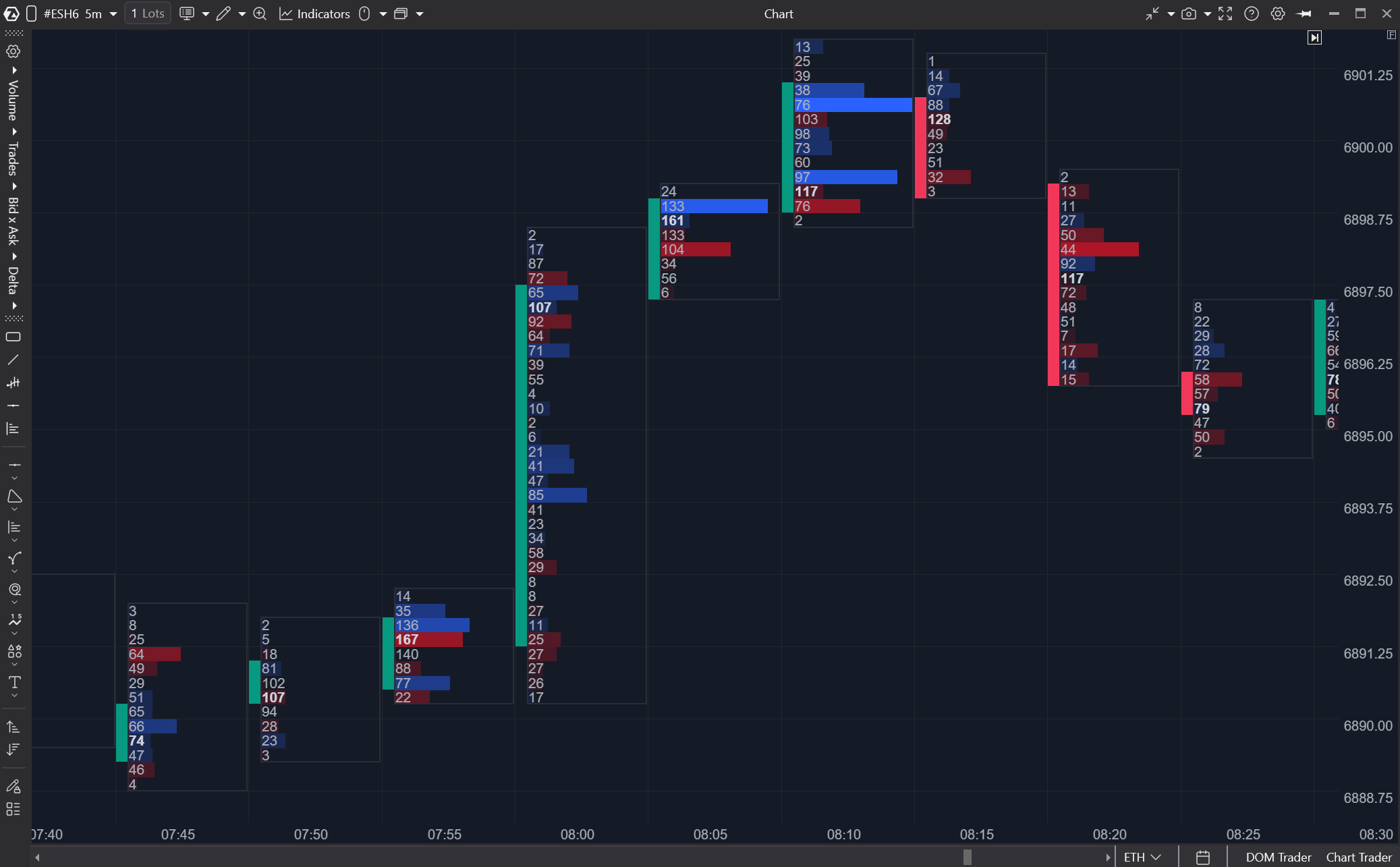 All four types are different projections of the same matching engine data. Bid/Ask is the most detailed. Delta provides a quick balance. Volume shows the scale of activity. Profile gives a visual map. For reading patterns — use Bid/Ask. For quick assessment — Delta. For context — Volume Profile.
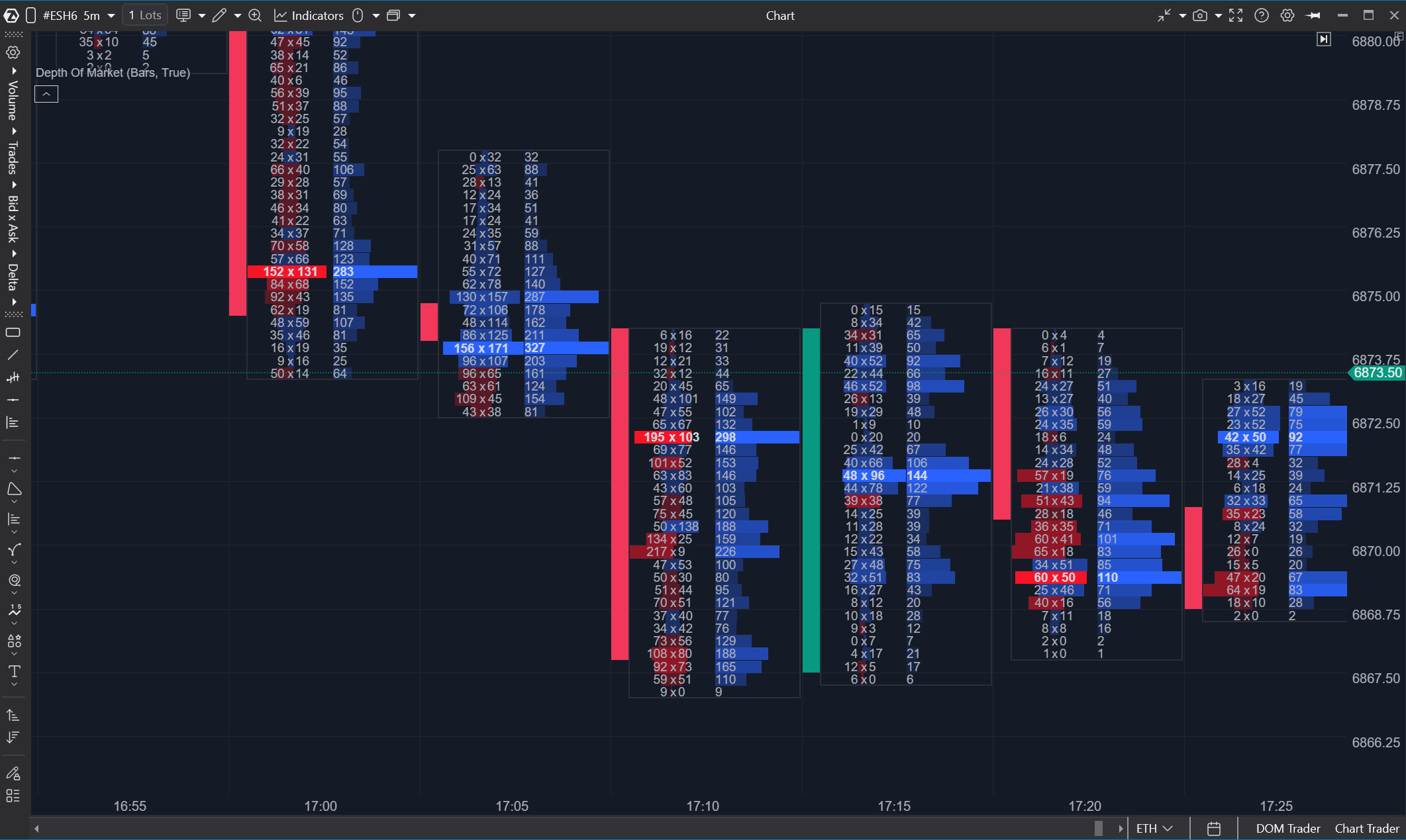
The ATAS platform also allows you to combine different footprint data types within each candle. For example, in the image below you can see a Bid/Ask profile colored by delta, with a Volume Profile alongside it. Maximum information, nothing missed.
Numbers: benchmarks by instrument
"Large volume" is a meaningless phrase without reference to the instrument and time of day. 500 contracts on ES in a five-minute bar — background noise. 500 on NQ — noticeable. 500 on Binance BTC futures at night — an anomaly.
| Parameter | ES (E-mini S&P) | NQ (E-mini Nasdaq) | BTC (Binance Futures) |
|---|---|---|---|
| Average 5-min candle volume (RTH) | 8,000-15,000 | 4,000-8,000 | varies by day |
| Imbalance threshold | 200% / 400% | 200% / 400% | 200% / 400% |
| "Initiative" delta percent | 10%+ | 10%+ | 10%+ |
| Anomalous volume at a level | 3x+ vs adjacent | 3x+ vs adjacent | 3x+ vs adjacent |
Percentages (200%, 400%, 10%) work the same on any instrument — these are relative thresholds. Absolute numbers are tied to the liquidity of the specific market. ES is the most liquid futures contract in the world; 500 contracts at a level is business as usual. On BTC futures during the overnight session, 500 contracts at a level is an event worth paying attention to.
How to calibrate: open 10 regular sessions on your instrument. Look at what volume levels are typical. Anything 3 times or more above that is an anomaly. This is how you build intuition for numbers — something no indicator can replace.
This does NOT mean
"High volume at a level = buyers won (or sellers)." No. High volume means many trades. Each trade is a meeting of an aggressor and a passive participant. If bid and ask are roughly equal — it is a battle with no winner (absorption). If one side dominates — look at the level delta. Volume by itself is activity, not direction.
"An imbalance = a guaranteed signal." No. An imbalance shows local domination of one side at a specific level. A single data point. It could be algorithmic noise, a momentary spike, randomness. A signal emerges in context: three consecutive imbalances (stacking), an imbalance at a key Volume Profile level, an imbalance confirmed by CVD. A single imbalance without context is like a single candle without a chart.
"Footprint shows where price will go." No. Footprint shows what happened. Who was the aggressor, where volume occurred, where imbalance exists. This is data, not a forecast. The market in the next second can behave differently than in the previous one. Footprint gives an edge — but an edge means "right more often," not "always right."
"Large delta = price must move." No. Absorption: a passive participant absorbs the flow. Delta is +500, yet price stands still — because on the other side sits an iceberg or a large limit order. Delta shows the aggression balance, not the result in price. The result depends on who is standing on the other side of the trade.
Quiz
1. Delta footprint shows +20 at a level. What is lost compared to Bid/Ask footprint?
2. A trader says: "Footprint shows where price will go." What is wrong with this?
3. Which footprint type is best suited for a quick assessment of the buyer/seller balance at each level?
AI Assistant
Types, Benchmarks, and Limitations
How can I help?
Ask anything about this lesson